
Term vs Whole Life Insurance: Which Is Right for You?
Life insurance is a cornerstone of a sound financial plan. It replaces lost income, pays off debts, and helps loved ones maintain their standard of living after your death. The two primary categories are term life insurance and whole life insurance. While both provide a death benefit, they differ dramatically in cost, cash value, longevity, and complexity. This guide will help you understand the nuances so you can choose the policy that truly fits your family’s needs.
What Is Term Life Insurance?
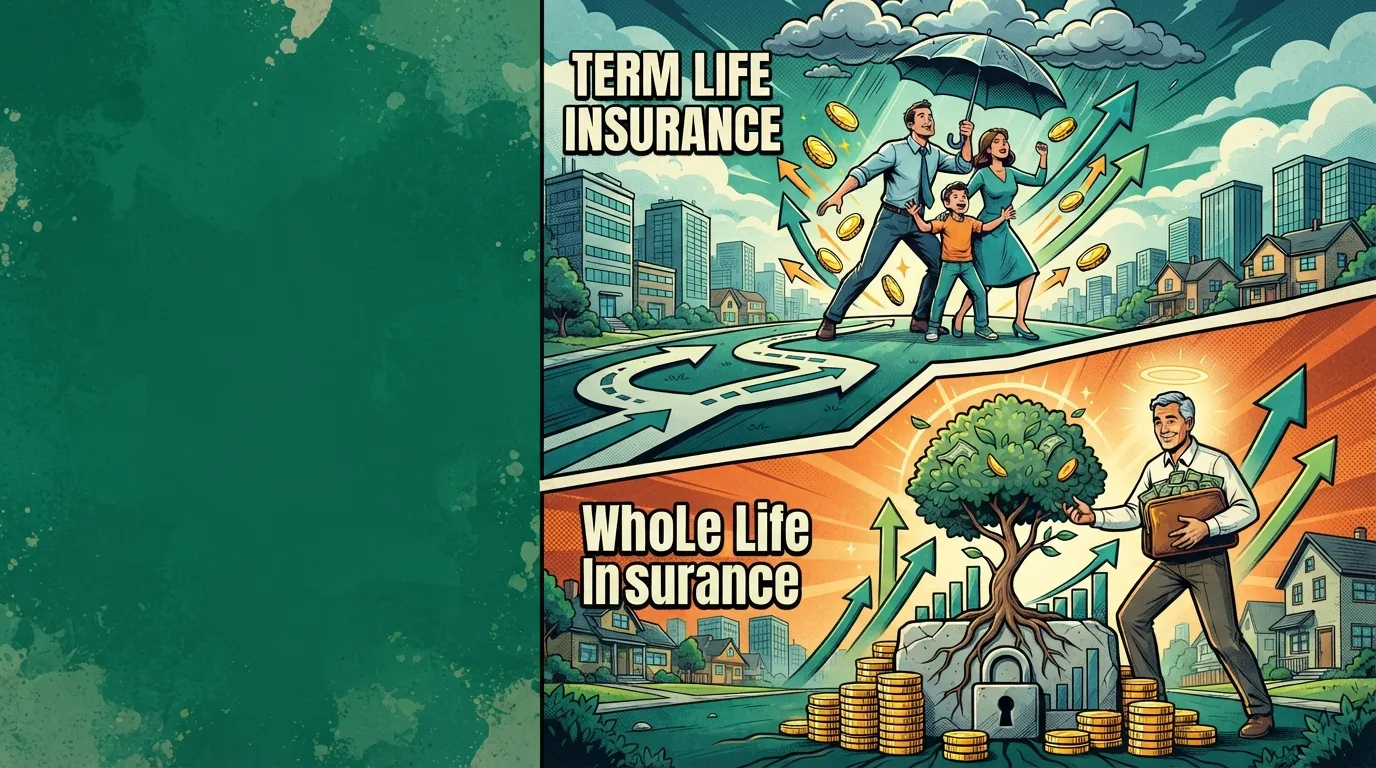
Term life insurance is a contract that provides coverage for a specific period, known as the term. Common terms are 10, 15, 20, 25, or 30 years. If the insured dies during that time, the insurance company pays a tax-free lump-sum death benefit to the beneficiaries. If you outlive the term, coverage simply ends unless you renew, convert, or let it lapse.
Key features of term life:
- Level, predictable premiums: You pay the same amount each month for the duration of the term. After the term, if you renew, premiums often rise sharply because they’re recalculated based on your older age.
- No cash value: Term is pure protection. You don’t build savings; you pay only for the risk of death.
- Convertibility: Many term policies include a conversion rider that lets you switch to a permanent policy (like whole life) without a new medical exam. This is valuable if your health changes during the term.
- Riders available: You can add accidental death, disability waiver of premium, or accelerated death benefits.
Who needs term life?
Term aligns perfectly with temporary obligations:
- Paying off a mortgage or large debts.
- Funding children’s college education.
- Replacing income for a surviving spouse and kids until retirement.
- Complementing group life insurance from an employer.
According to the Insurance Information Institute, term life is usually the most affordable way to secure a large death benefit, making it the first choice for most families.
What Is Whole Life Insurance?
Whole life insurance is a type of permanent life insurance that remains in force for your entire lifetime, provided you keep paying premiums. It offers a guaranteed death benefit and also builds cash value over time. This savings component grows tax-deferred, meaning you don’t pay taxes on growth until you withdraw money (or you can borrow against it).
Key features of whole life:
- Fixed premiums from day one: You pay a higher level premium compared to term for the same face amount, but the rate never rises.
- Guaranteed cash value: The insurer promises a minimum cash value schedule. Actual dividends may increase the cash value if the insurer earns favorable investment returns.
- Policy loans: You can borrow against the cash value, often at net interest rates that are favorable, but unpaid loans reduce the death benefit.
- Dividends: Mutual insurers may pay annual dividends, which are not guaranteed. They can be used to reduce premiums, buy paid-up additions, or take as cash.
- Lifetime protection: Unlike term, the policy won't expire if you outlive the term. As long as premiums are paid, the death benefit is there.
- High cost: Whole life premiums are significantly higher. For instance, a 35-year-old nonsmoking male could pay around $400-$500 per month for a $500,000 whole life policy, compared to just $25-$40 per month for a 20-year term policy.
Whole life is often marketed as a “forced savings” tool, but the returns are modest. The cash value typically grows 1% to 3% a year in guaranteed interest, and early years have high sales commissions and surrender charges. Therefore, it’s best suited for long-term estate planning needs, not for medium-term accumulation.
Key Differences Between Term and Whole Life
Here’s a side-by-side comparison:
| Aspect | Term Life | Whole Life | |--------|-----------|------------| | Coverage length | 10–30 years | Lifetime | | Premium | Low, level | High, fixed | | Cash value | None | Builds tax-deferred | | Investment return | No | Low (1%–3%) | | Fees | Low | High upfront | | Best for | Temporary needs | Estate planning, permanent dependents |
The single most important difference is purpose. Term is protection for a defined window. Whole life is protection plus a savings vehicle, but you pay a premium for that combination that may not beat investing on your own.
How to Choose Between Term and Whole Life
The decision isn’t about which is “better” — it’s about what your family needs and what you can sustain. Follow this step-by-step framework:
- Calculate your coverage need. Add up your mortgage, debts, income replacement for 10–20 years, and future education costs. Subtract your existing savings and current life insurance. That’s your target death benefit.
- Determine your time horizon. If you have young children or a mortgage, you likely need coverage for 20 years. If you have a child with special needs or want to leave a legacy, a permanent need may exist.
- Compare the annual premium and cash flow. If you can’t afford whole life without sacrificing other savings goals, term is the rational choice. Remember, you can convert term later if your situation changes.
- Consider “buy term and invest the difference.” With the premium savings, invest in a low-cost index fund or retirement account. Historically, a diversified stock portfolio has yielded 7%–10% annually before fees, while whole life cash value often lags 2%–4%. For most people, the invest-the-difference strategy wins.
- Look beyond the policy. Whole life can be a useful tool for wealthy families managing estate taxes or business owners funding buy-sell agreements. In those cases, it’s not about cash value but about guarantee and permanent liquidity.
- Consult an independent fiduciary. Life insurance is often sold, not bought. Work with a fee-only financial planner or an independent broker who can compare policies from multiple carriers.
Real-Life Scenarios
Let’s put this into practice.
Scenario A: The family builder. Sophia, 32, is married with two kids and a $300,000 mortgage. Her husband earns $80,000 a year. They need coverage for the next 25 years. A 25-year term policy with a $1 million death benefit costs about $50–$70 a month. Whole life for $1 million could cost more than $700 a month. Sophia chooses term and invests the difference in a 529 plan and Roth IRA. This gives her adequate protection without shortchanging other goals.
Scenario B: The business owner. David, 50, co-owns a construction firm with a partner. They bought whole life policies on each other so that if one dies, the survivor gets cash to buy the late partner’s shares. The permanent coverage ensures the policy is in force regardless of age, and the cash value can be used to fund the buyout. Term wouldn’t guarantee coverage beyond the term or offer predictable liquidity.
Scenario C: The wealthy family. Rachel and her husband have a $10 million estate. Federal estate tax exemptions might expire or be reduced in the future. They use a life insurance trust to own a whole life policy on each spouse. At death, the death benefit is paid to the trust, providing tax-free liquidity to pay estate taxes or equalize inheritances. The permanent nature of whole life ensures the funds are available whenever death occurs.
These examples show that both products have a role. The key is matching the tool to the obligation.
Bottom Line
For most individuals and families, term life insurance offers the most straightforward, cost-effective way to protect loved ones during the working years. Whole life insurance shines in narrower situations: permanent dependents, estate liquidity, business succession, and people who want a forced, conservative savings mechanism.
But the fact remains: life insurance is first and foremost about the death benefit. If you buy whole life solely for cash value, you are likely overpaying for an investment that may underperform a simple portfolio of stocks and bonds. A more disciplined approach is to buy term for the coverage you need now and invest the premium difference in tax-advantaged accounts.
Take stock of your life stage, your debts, and your goals. Speak with a licensed professional who can explain policy illustrations and costs transparently. Then choose the policy that lets you sleep at night knowing your family is protected — without throwing away money you could have used elsewhere.
Frequently Asked Questions
Is term life insurance cheaper than whole life?
Yes, term life premiums are typically 5 to 15 times lower than whole life for the same death benefit. That’s because term has no cash value and only lasts for a set period.
Can I convert a term life policy to whole life?
Many term policies include a conversion rider that lets you switch to a permanent policy like whole life without a medical exam, usually during the term. This can be valuable if your health has declined.
Does whole life insurance build cash value?
Yes. Whole life insurance builds cash value that grows tax-deferred at a guaranteed minimum rate, and mutual insurers may also pay dividends. However, growth is slow and early fees are high.
References