Emergency Fund: How Much Should You Save?
An emergency fund is cash set aside to cover unexpected expenses—job loss, medical bills, car repairs, or a broken water heater. Financial professionals almost universally agree it should be your first savings goal. But a common question is, “Exactly how much should I save?” The short answer: three to six months of essential expenses. However, the number isn’t magic; it depends on your income, dependents, job stability, and comfort level. This article walks you through how to determine your target, where to keep the money, and practical ways to build it—even if you're starting from zero.
The Standard Rule: 3 to 6 Months of Essential Expenses
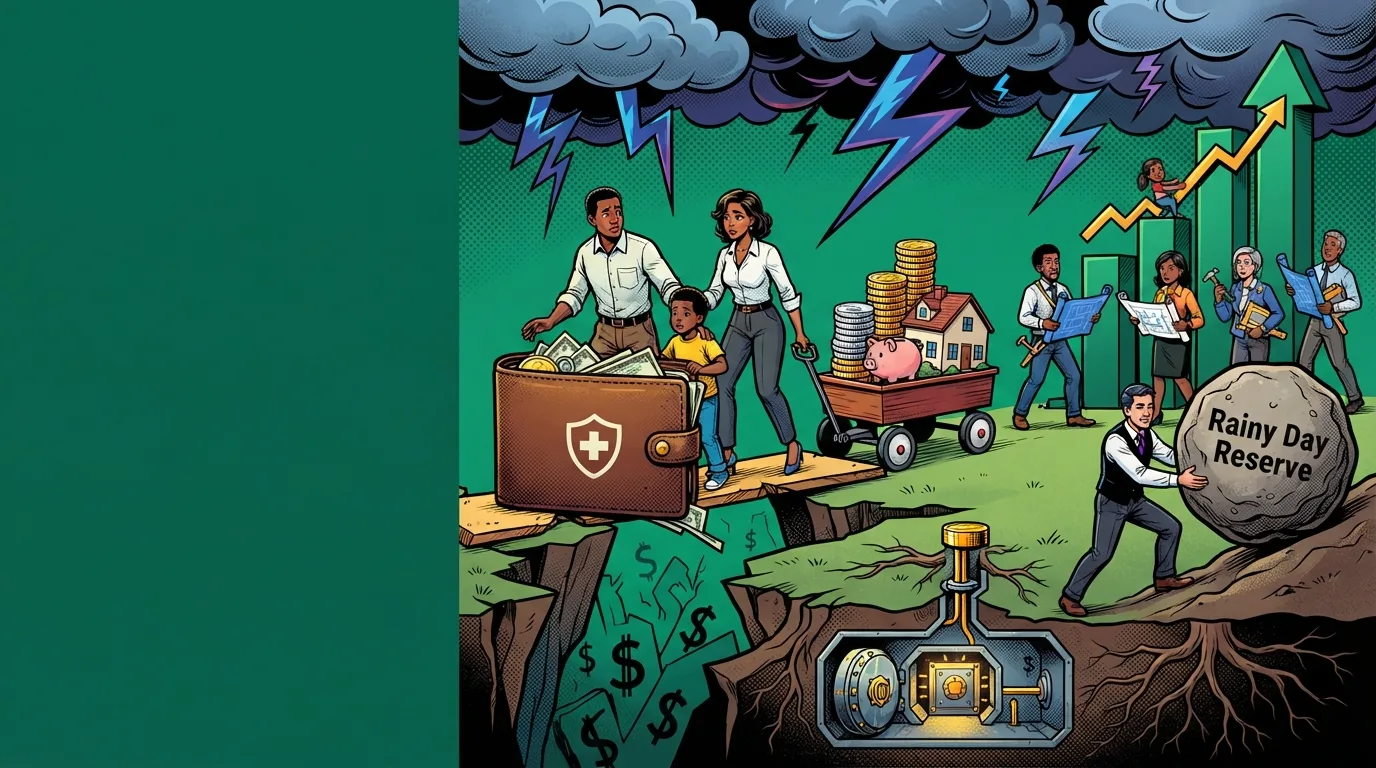
Most personal finance experts, including those at consumer finance agencies, recommend maintaining an emergency fund equal to three to six months of living expenses. The Federal Reserve’s Survey of Consumer Finances and other data show that many households don’t have this buffer; in fact, a recent Fed report found that 37% of adults would cover an unexpected $400 expense by borrowing or selling something. That’s why the 3-to-6-month guideline exists: it creates a financial cushion that helps you avoid debt and stay solvent during a bout of unemployment or a large outlay.
To calculate your own target, start with your monthly essentials—housing, utilities, groceries, transportation, insurance, minimum debt payments, and childcare. Exclude discretionary items like entertainment, restaurants, and subscriptions. For example, if your essentials total $3,500 per month, a 3-month fund is $10,500 and a 6-month fund is $21,000. According to data from the Bureau of Labor Statistics, the average annual expenditures for a household in 2023 was around $77,000, which translates to roughly $6,416 per month. But that includes taxes and discretionary spending, so a realistic essential-expense estimate is often lower. The exact number is less important than having a formula you can follow and adjust.
Factors That Change How Much You Need
The rule is a starting point. Adjust your number based on these factors:
- Job security. If you work in a stable field like government, healthcare, or education, 3 months may suffice. In cyclical industries such as construction, tech, or media, target 6 months or more.
- Income volatility. Freelancers, commission-based sales representatives, and business owners face uneven income. For them, 6 to 9 months of expenses is often safer.
- Dependents and family size. A single person with minimal obligations needs less than a family with children, elderly parents, or special-needs dependents.
- Debt and fixed payments. If you have high-interest credit card debt, you might want a smaller emergency fund ($1,000–$2,000) while you aggressively pay it off. Once the debt is gone, build a full fund.
- Health and insurance risk. A high-deductible health plan, chronic medical condition, or a home that requires frequent repairs all increase your target.
- Dual vs. single income. Two-earner households can generally manage with a smaller buffer because the disruption of one person losing their job is less catastrophic. Still, account for the probability that both could be affected in the same economy.
Use a simple self-assessment: on a scale of 1 to 10, rate your overall financial risk (1 = very stable, 10 = very volatile). If you score below 4, stick with 3 months. Between 4 and 7, choose 5 months. Above 7, go for 6 or even 9 months.
Consider a family with two children, a mortgage, and student loans. Their fixed monthly costs are $6,000. A 3-month fund would be $18,000. If the primary earner works in sales, a 6-month fund of $36,000 is more realistic. Ask yourself: How long would it take you to replace your income if you lost it? Add at least a month or two to that time frame.
Where to Keep Your Emergency Fund
An emergency fund must be liquid, safe, and separate from spending money. The best tool is a high-yield savings account (HYSA). Online banks often offer rates above 4% (as of 2025), and accounts are FDIC-insured up to $250,000. You can withdraw funds anytime with no penalty. Money market accounts are also good, offering slightly higher rates in some cases, but may require a minimum balance.
A traditional brick-and-mortar savings account yields a mere 0.46% APY on average, while many online high-yield accounts pay over 4.00% APY. On a $10,000 balance, that’s $400 a year in interest versus $46. It’s not a windfall, but it helps your fund keep up with inflation.
Avoid keeping your emergency fund in a regular checking account (too easy to spend), a brokerage account (stock market declines can slice your balance), or a long-term CD (early withdrawal penalties). Some people use an account at a different bank from their checking account, which adds a small delay but prevents impulse withdrawals. If you’re concerned about inflation eating away at the value, remember that your emergency fund is not an investment—it’s insurance. You can keep a portion in I bonds for longer-term reserves, but the bulk should remain accessible.
What Counts as an Emergency (and What Doesn't)
Part of deciding how much you need is defining what you’ll use it for. Legitimate emergency expenses include job loss, sudden medical bills, urgent home repairs (e.g., a leaking roof or broken furnace), and necessary car repairs. Planned purchases like a new TV, a vacation, or a wedding do not qualify. Many people also use sinking funds for predictable but irregular expenses—car insurance, annual property taxes, or holiday gifts.
For instance, new tires for your car or a $1,500 dental emergency are legitimate withdrawals. But if you're tempted to use the fund for a concert ticket, you've defined it wrong. Try labeling separate savings buckets in your bank app to distinguish between your emergency fund and fun fund.
How to Build Your Emergency Fund
Building a full emergency fund takes time. Here’s a step-by-step approach:
- Set a specific goal. Use your monthly essentials and your target months to arrive at a number. Write it down.
- Start with a mini fund. If you don’t have savings, aim for $500 to $1,000 first. This will cover a minor car repair or a medical copay without using credit cards.
- Automate savings. Set up a recurring transfer to your high-yield savings account on payday. Even $25 per week adds up to $1,300 in a year.
- Use windfalls wisely. Channel tax refunds, bonuses, cash birthday gifts, and side hustle income directly into your emergency fund.
- Cut non-essential spending. Review your subscriptions, dining out, and entertainment. Redirect the savings to your fund.
- Increase income. Temporarily work overtime, take a weekend job, or sell unused items. Every extra dollar accelerates your progress.
- Reassess quarterly. Your expenses change with life events. If you get a raise, increase your contributions to the fund.
If you save $100 every two weeks, you'll have $2,600 in a year. At $200 every two weeks, it's $5,200—a solid foundation for a 3-month fund. Use a no-spend weekend challenge to jump-start your savings; you might be surprised how much you free up.
Remember, you don’t need to save six months overnight. Many people take 12–18 months to complete this goal. The key is consistent action.
Bottom Line
The ideal emergency fund balances what financial planners recommend with what you can realistically save. A 3-to-6-month cushion is the benchmark for most people, but your unique circumstances—job stability, income, family size, and health—may push it higher or lower. What matters most is that you start saving now, keep the money liquid, and replenish it after you use it. An emergency fund isn’t about earning a return; it’s about giving you the freedom to face life’s surprises without falling into debt.
Frequently Asked Questions
How much should an emergency fund be for a single person?
A single person with a stable job and low fixed costs can typically aim for 3 months of essential expenses. If your monthly essentials are $2,500, that's $7,500. If you have variable income, target 6 months ($15,000).
Is $1,000 enough for an emergency fund?
A $1,000 fund is an excellent starting point for beginners. It can cover a minor repair or urgent bill, but it's not enough for major job loss. Use $1,000 as the first milestone, then grow it to 3-6 months of expenses.
What is the best account for an emergency fund?
The best place is a high-yield savings account or money market account that's FDIC-insured and offers quick access without withdrawal penalties. Keep it separate from your everyday checking account to avoid temptation.
References