Investment Diversification: A Practical Guide to Managing Portfolio Risk
Investment diversification is one of the most powerful and widely recommended risk-management tools in personal finance. It’s based on a simple idea: don’t put all your eggs in one basket. By spreading your money across different asset classes, industries, and geographic regions, you can reduce the impact of any single investment failing. In this guide, we’ll explain how diversification works, why it matters for your financial goals, and how to put it into practice without overcomplicating your portfolio.
What Investment Diversification Really Means

Investment diversification is a strategy that involves owning a mix of assets that behave differently under various market conditions. The goal is not to maximize returns but to reduce the overall risk of your portfolio. When one investment drops in value, others may hold steady or rise, cushioning the blow.
The formal foundation of diversification comes from Harry Markowitz’s 1952 paper “Portfolio Selection,” which later earned him the Nobel Prize in Economics. Markowitz demonstrated that combining assets with low correlations—meaning they don’t move in perfect lockstep—can lower a portfolio’s overall volatility without necessarily sacrificing expected returns. This insight remains the cornerstone of modern portfolio theory.
Diversification does not guarantee against loss, nor does it eliminate market risk (the risk that the entire market declines). Instead, it targets “unsystematic risk”—the risk specific to a single company, industry, or country. By spreading your investments, you dilute this idiosyncratic risk so that no single event can derail your financial plans.
The Benefits of Diversification
Why is investment diversification so critical? The benefits are both practical and psychological:
- Reduced volatility: A diversified portfolio experiences smaller swings in value. For example, stocks may have a bad year while bonds generate steady income, smoothing your overall returns.
- Protection from individual stock blowups: If one company fails (think Enron or a start-up that goes bankrupt), a well-diversified investor loses only a small fraction of their portfolio, not a catastrophic amount.
- Opportunity for rebalancing: As asset classes shift, you can sell overperforming assets and buy underperforming ones. This disciplined approach often forces you to “buy low and sell high.”
- Exposure to global growth: Diversifying internationally lets you participate in growth in emerging markets or developed economies that may be stronger than your home market at any given time.
- Peace of mind: Knowing you aren’t overly dependent on a single stock or sector can help you stay the course during market turbulence, which is one of the most important determinants of long-term investing success.
According to research from Vanguard, a portfolio that holds both stocks and bonds has historically achieved a majority of the return of an all-stock portfolio with significantly less volatility. For instance, a 60% stock/40% bond allocation captures a large share of stock market gains while cushioning drawdowns—a trade-off most investors find attractive.
How to Build a Diversified Portfolio
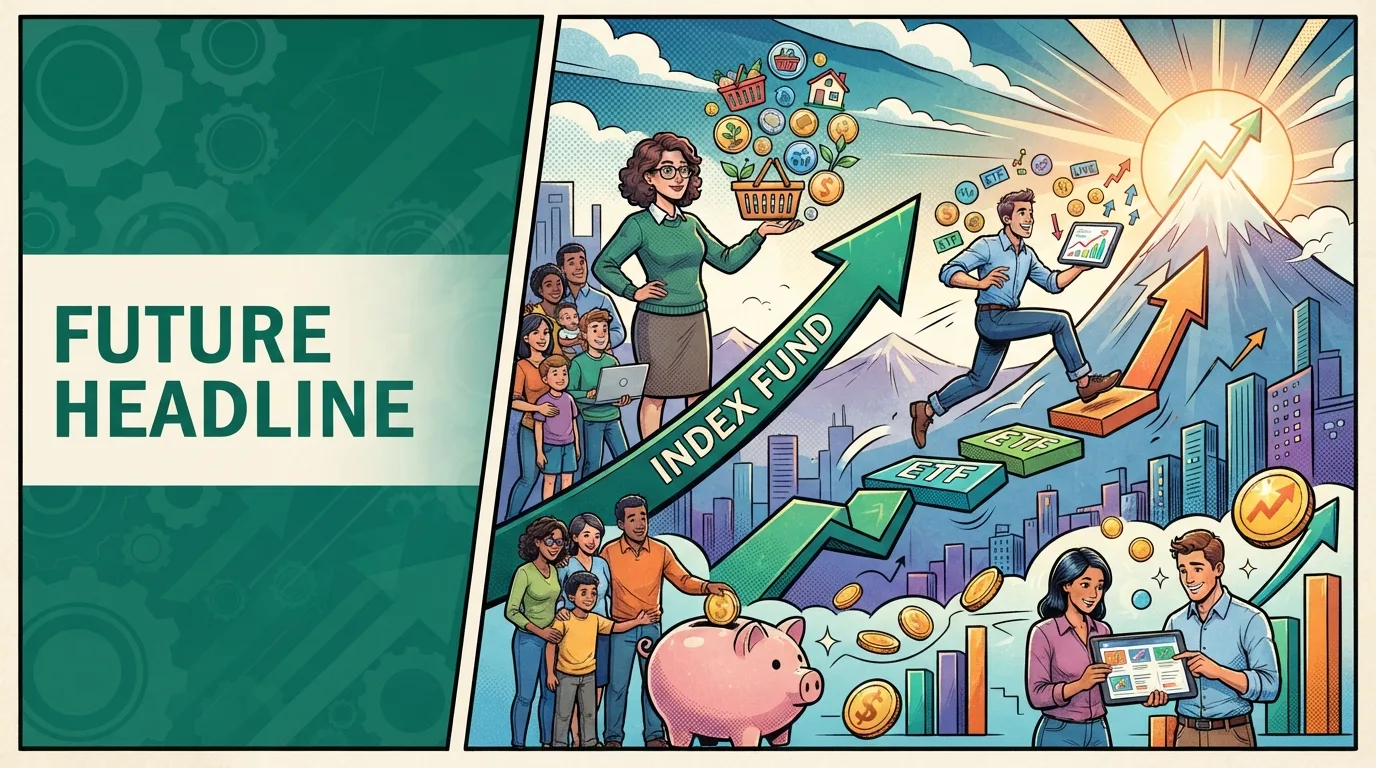
Constructing a diversified portfolio doesn’t require picking dozens of individual stocks. In fact, modern index funds and exchange-traded funds (ETFs) make it easy to achieve broad diversification with a few holdings. Here are the key dimensions to consider:
1. Asset Classes
Spread your money across distinct asset classes that respond differently to economic events:
- Stocks (equities): Growth potential but higher volatility.
- Bonds (fixed income): Income and stability; generally less volatile than stocks.
- Cash and cash equivalents: Safety and liquidity, though returns are low.
- Real estate: Provided through REITs or real estate crowdfunding; acts as an inflation hedge and offers diversification.
- Commodities: Includes gold, oil, and agricultural products; often perform when inflation is high and stock markets are struggling.
2. Sectors and Industries
Within your stock allocation, avoid concentrating too heavily in one sector. For example, if you hold only technology stocks, a tech downturn—like the dot-com crash or the 2022 selloff—will hammer your portfolio. Instead, include sectors like healthcare, consumer staples, energy, financials, and industrials. Sector diversification ensures that no single industry event can dominate your returns.
3. Company Size (Market Capitalization)
Own a mix of large-cap, mid-cap, and small-cap companies. Large caps tend to be stable though slower-growing; small caps can offer higher growth but carry more risk. A blend captures the full spectrum of market behavior.
4. Geographic Regions
Don’t limit yourself to your home country’s market. The U.S. stock market has outperformed globally for much of the last decade, but there have been extended periods when international stocks outperformed. Owning global equities—either through a total-world index fund or by adding international funds separately—exposes you to economic growth in other regions and hedges against domestic downturns.
5. Time Horizon and Risk Tolerance
Your diversification strategy should reflect your personal situation. A young investor with a long time horizon can afford more stocks and fewer bonds. Someone near retirement will want a heavier allocation to bonds and cash to protect principal.
Practical Tools: Index Funds and ETFs
Rather than buying individual securities, use low-cost index funds or ETFs that track broad market indices. A simple approach is the “three-fund portfolio”: a total U.S. stock market index fund, a total international stock index fund, and a total bond market index fund. With just three holdings, you gain exposure to thousands of securities across the globe.
Common Mistakes and the Over-Diversification Trap
While diversification is beneficial, more is not always better. Over-diversification—sometimes jokingly called “diworsification”—can hurt your portfolio in several subtle ways:
- Diluted returns: If you hold too many funds that overlap, you may end up with an average return that merely tracks the market, while also missing out on the potential for outsized gains from strong performers.
- Higher costs: Each fund or investment may come with fees. Owning dozens of funds can mean paying more in expense ratios and transaction costs, eating into your net returns.
- Complexity: A portfolio with 50 holdings is harder to monitor and rebalance. Complexity often leads to inaction or inappropriate changes at the wrong times.
- False sense of security: Owning many funds that all invest in the same style (e.g., large-cap growth) does not provide meaningful diversification. True diversification requires assets that behave differently.
- Neglecting non-financial risks: Don’t forget about human capital and employment. If your employer’s stock is a large part of your compensation and your retirement portfolio, you are over-exposed to your own company’s risk. Selling employer stock and investing in broad index funds can be a prudent move.
The key is to find the right balance. For most investors, a portfolio of 10 to 20 low-cost index funds or ETFs is more than enough to achieve proper diversification. Adding more beyond that yields little marginal benefit.
A Simple Diversification Framework for Beginners
If you’re just starting out, follow a systematic process rather than trying to DIY with individual stocks:
- Choose a core allocation: Begin with a 60/40 split between stocks and bonds, adjusting based on your risk tolerance and time horizon. For example, if you’re 30 years old, you might use 70% stocks and 30% bonds; if you’re 60, consider 50/50.
- Select broad-market index funds: Pick one total U.S. stock market fund, one total international stock fund, and one total bond market fund. This gives you instant diversification across thousands of securities.
- Add satellite holdings if desired: Once your core is set, you can add small positions (5–10% each) in real estate (REITs) or commodities for additional diversification.
- Set a rebalancing schedule: Review your portfolio every six to twelve months. If one asset class has grown beyond its target allocation, sell some of it and buy the laggards. This enforces the discipline of “buy low, sell high.”
- Keep investing regularly: Make automatic contributions each month. This smooths the impact of market volatility and leverages dollar-cost averaging.
Remember, diversification is not a one-time event. As your financial circumstances change and markets move, you should periodically revisit your target allocations and adjust your holdings accordingly.
Bottom Line
Investment diversification is a proven, evidence-based strategy for managing risk without sacrificing too much potential return. By spreading your money across asset classes, sectors, and geographies, you reduce the chance that one unlucky investment wrecks your financial plan. The key is to build a simple, low-cost portfolio that you can maintain and rebalance over time—and then stay disciplined through market ups and downs.
No strategy can eliminate all risk, but diversification remains one of the most reliable tools in the investor’s toolkit. Start small, use broad index funds, and let the power of diversification work for you over the long run.
Frequently Asked Questions
How many stocks or funds do I need to be properly diversified?
For individual stocks, research suggests that owning 15–30 well-chosen stocks can reduce unsystematic risk significantly, but even more is often needed. The simplest and most effective approach is to own broad-market index funds; a three-fund portfolio covering U.S. stocks, international stocks, and bonds is sufficient for most investors.
Can investment diversification guarantee that I won't lose money?
No. Diversification reduces the risk of severe losses from any single investment, but it cannot prevent losses from broad market declines. Even a fully diversified portfolio will fall in value during a bear market, though typically by less than a concentrated stock portfolio.
How often should I rebalance my diversified portfolio?
Most experts recommend reviewing your portfolio every six to twelve months. If your target allocation has drifted by more than a few percentage points (e.g., stocks grew from 60% to 70%), sell some stocks and buy bonds to restore balance. Automatic rebalancing features in robo-advisors can also handle this for you.
References